
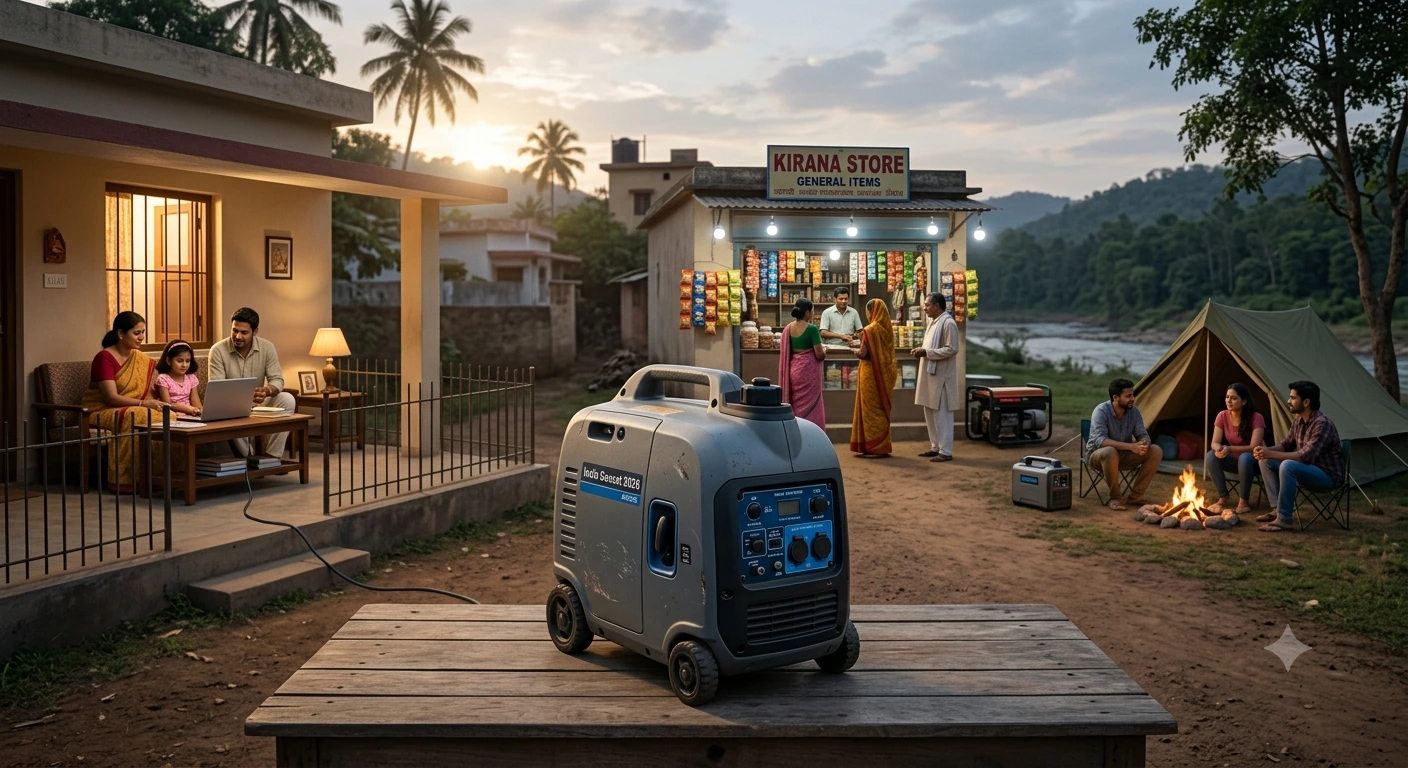
Best Portable Generators in India for Home, Business & Outdoor Use (2026)
Power cuts still hit Indian homes and businesses every year, especially during peak summer months and monsoon storms. A reliable portable generator solves this problem. It keeps your lights on, your fridge running, and your business open even when the grid fails. In this guide, we cover the best portable generators available in India in 2026, how to pick the right one, and what to check before you buy.
Why You Need a Portable Generator in 2026
Indian cities and towns still face unscheduled outages. Construction sites need power where the grid doesn't reach. Outdoor events, camping trips, and weddings need electricity in open fields. A portable generator solves all these problems in one device. Unlike a fixed installation, you can move it, store it, and use it exactly where you need power.
Buyers now want generators that start quickly, run quietly, and use less fuel. Manufacturers have responded with inverter technology, lighter frames, and cleaner engines that meet the Central Pollution Control Board's (CPCB) emission norms. This shift makes 2026 a good year to upgrade if you're still using an old, noisy model.
Types of Portable Generators Available in India
Before you pick a model, understand the three main types sold in India.
Conventional Petrol/Diesel Generators These generators run on a standard engine and alternator. They deliver strong power output at a lower upfront cost, but they run loud and produce less stable electricity. They suit outdoor work, farms, and construction sites where noise isn't a concern.
Inverter Generators Inverter models convert power through an electronic circuit, so they deliver clean, stable electricity. This makes them safe for laptops, routers, TVs, and other sensitive electronics. They also run quieter and use less fuel because they adjust engine speed to the load. Homes and offices increasingly prefer this type.
LPG/Dual-Fuel Generators These generators run on LPG, petrol, or both. They cost less to run per hour and burn cleaner than pure petrol models. They work well for households that already keep LPG cylinders on hand.
Top Portable Generator Picks for 2026
Here's a breakdown by use case, based on current market offerings from trusted brands in India.
Best for Home Use: Honda EU Series (Inverter Generators)
Honda dominates the inverter generator segment in India. The Honda Handy Series weighs around 27.4 kilos and comes with a 3.6-litre fuel tank, an eco-throttle system for fuel efficiency, castor wheels for easy movement, and a manual recoil starter. Honda builds these units with low-fume engines, so they stay safe to run near living spaces.
Larger models like the Honda EU30i deliver close to 3 kVA of clean output and work well for homes that want to power a fridge, fans, lights, and a TV together during an outage. Honda's inverter range costs more than basic petrol models, but the quiet operation and stable output make them worth it for residential use.
Best suited for: Apartments, independent homes, and anyone who needs quiet, clean power for sensitive electronics.
Best Budget Option: Entry-Level Petrol Generators (1–2 kVA)
If you only need to power a few LED lights and a fan during short outages, an entry-level petrol generator does the job. These compact units typically deliver around 1.2 kW output with a manual recoil start and a lightweight frame, which makes them easy to carry between rooms.
Expect to pay between ₹20,000 and ₹40,000 for this category, depending on the brand and build quality. They work best for small shops, single-room offices, and homes with light load requirements.
Best suited for: Small retail shops, single-room setups, and buyers on a tight budget.
Best for Business & Small Offices: Mid-Range Inverter Models (2–5 kVA)
Small offices need generators that protect computers, routers, and printers from voltage spikes. Mid-range inverter generators in the 2–5 kVA range handle this well. These models typically fall in the ₹50,000 to ₹80,000 price range and combine an inverter-based configuration with reduced fuel consumption, which keeps running costs manageable during longer outages.
Brands like Honda, Elemax, and Kirloskar offer strong options in this category. Elemax, in particular, uses Japanese technology and earns a reputation among Indian buyers for durability, fuel efficiency, and quiet operation.
Best suited for: Small offices, retail chains, clinics, and co-working spaces.
Best for Heavy Home Loads: 3–5 kVA Petrol/Dual-Start Generators
If your home runs a refrigerator, water pump, and multiple fans together, you need more power than an entry-level unit provides. Generators in this range often include a dual start option, a petrol-driven engine, and higher load support capability, which lets you handle bigger appliances without tripping the unit.
This category typically costs somewhere between ₹40,000 and ₹1,10,000 depending on capacity and brand, and it works well for larger households or homes in areas with frequent, long outages.
Best suited for: Larger homes, joint families, and areas with frequent long-duration outages.
Best for Construction & Heavy Business Use: 6–10 kVA Diesel Generators
Construction sites, warehouses, and larger commercial setups need more sustained power than a home generator can deliver. Diesel models in the 6–10 kVA range handle tools, machinery, and multiple circuits at once. This category usually costs between ₹80,000 and ₹1.5 lakhs, and brands like Mahindra Powerol, Cummins, and Kirloskar Green lead this segment with rugged, long-duty-cycle builds.
These generators run louder than inverter models, so they suit outdoor or semi-outdoor locations rather than homes or offices.
Best suited for: Construction sites, warehouses, workshops, and factories.
Best for Outdoor Events & Camping: Compact Petrol Generators (1–3 kVA)
Camping trips, outdoor weddings, and food stalls need generators that you can carry by hand and set up anywhere. Compact petrol models with recoil start work well here because they don't need a power source to start and they weigh little enough to fit in a car boot.
Look for a model with a sealed fuel tank, a sturdy handle, and a low noise rating if you plan to use it near tents or guests. Many buyers in this segment also choose dual-fuel (LPG/petrol) units, since LPG cylinders are easy to carry and burn cleaner outdoors.
Best suited for: Camping, outdoor events, food stalls, and remote work sites.
How to Choose the Right Portable Generator
Follow these steps to match a generator to your actual needs, rather than overspending or underbuying.
1. Calculate your total load. Add up the wattage of everything you plan to run at the same time — lights, fans, fridge, router, and so on. Choose a generator that comfortably exceeds this total, since appliances like refrigerators and pumps draw extra power when they start.
2. Decide between petrol, diesel, and LPG. Petrol generators start easily and suit light, short-duration use. Diesel models handle heavier, longer loads and cost less to run per hour, but they weigh more and run louder. LPG models burn cleaner and suit homes that already stock cylinders.
3. Check for inverter technology if you use electronics. If you plan to power a laptop, TV, or medical equipment, choose an inverter generator. It protects your devices from voltage fluctuations that standard generators can produce.
4. Look at noise levels. Residential areas often restrict noisy equipment, and neighbours won't appreciate a loud generator running for hours. Inverter models run significantly quieter than conventional ones.
5. Confirm CPCB compliance. Buy only generators that meet Central Pollution Control Board emission norms. This keeps you compliant with local regulations and reduces harmful emissions.
6. Check warranty and service network. Choose a brand with service centres near you. Generators need periodic maintenance, and a strong service network saves you time when something goes wrong.
7. Test the start mechanism. Recoil-start models cost less but require manual effort. Electric-start and dual-start models cost more but start instantly, which matters during emergencies.
Price Guide: What to Expect in 2026
Based on current market data, here's a general price breakdown by capacity:
- 1–2 kVA petrol generators: ₹20,000 – ₹40,000
- 2–3 kVA inverter generators: ₹50,000 – ₹1,10,000
- 3–5 kVA inverter or diesel models: ₹50,000 – ₹80,000
- 6–10 kVA portable diesel generators: ₹80,000 – ₹1.5 lakhs
Prices vary by brand, fuel type, and features such as noise insulation, remote start, and automatic voltage regulation. Always check the latest price directly with the seller before you buy, since fuel costs and import duties can shift pricing through the year.
Maintenance Tips to Extend Generator Life
A generator lasts longer when you maintain it properly. Follow these basic steps:
- Run the generator for 15–20 minutes every month, even when you don't need it, to keep the engine parts lubricated.
- Change the engine oil after the first 20 hours of use, then every 50–100 hours after that.
- Store fuel in a sealed container and avoid letting old fuel sit in the tank for months.
- Clean or replace the air filter regularly, especially if you use the generator in dusty outdoor conditions.
- Keep the generator in a dry, ventilated space to prevent rust and moisture damage.
Final Thoughts
Choosing the best portable generator in 2026 comes down to matching your actual power needs with the right fuel type and capacity. Homes and small offices benefit most from quiet inverter models that protect electronics. Construction sites and businesses with heavy loads need rugged diesel generators built for long duty cycles. Campers and event organisers should prioritise weight and portability over raw power.
Whatever you choose, check CPCB compliance, compare warranty terms, and calculate your load accurately before you buy. A well-chosen generator pays for itself the first time the power goes out and your home or business keeps running without interruption.